April-June 2024

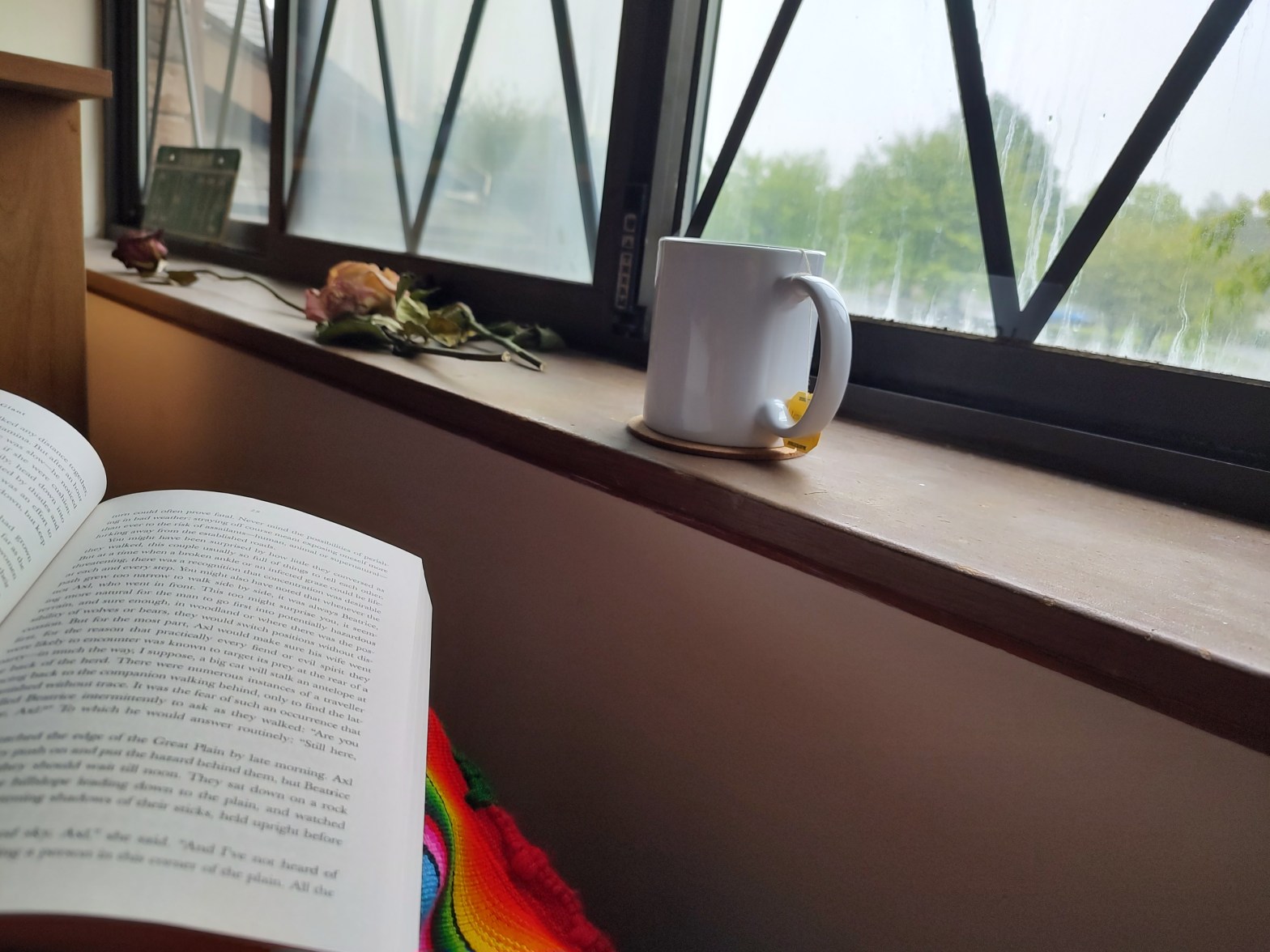
My reading this spring was eclectic, to put it mildly. I read a couple of contemporary novels that are very much in the vein I usually read, two stellar oldies, a poetry collection that left me both invigorated and annoyed, Mary Oliver’s essay collection “Upstream”, and Ralph Waldo Emerson’s book-length essay “Nature.”

“Upstream” is a somewhat peculiar collection. While there are the usual Oliver through currents of nature, spirituality and time, it’s apparent that this set of essays were not necessarily created to hang together. There’s a reason one reviewer called it a “sporadic spiritual autobiography.”

Sporadic as it might be, what is consistent throughout the collection is the quality of Oliver’s attention. Whether turned on the woodlands of her childhood, the lives and work of her literary heroes, or Provincetown, where she spent much of her adult life, Oliver’s attention transforms mere observation into something like love. And the unassuming prowess of her language leaves the reader no choice but to join in.

Oliver’s glowing review of Emerson as both a writer and a human led me to consider reading something of his, despite my usual preference for contemporary writing and women authors. Perhaps because I recently had the opportunity to spend a day in historic Concord hobnobbing with the relics of Emerson and his cadre, I gave in.

“Nature” is a funny piece of writing. Clearly structured as an academic work, the prose itself is far less academic than it is poetic. The transcendentalists, including Emerson, are typically characterized as proponents of self-sufficiency. But while solitude figures prominently in “Nature”, it’s clear that Emerson believes the real magic happens not completely within one’s own spirit but in the association of man and his landscape, the gift lifeless without the attention of the receiver and the receiver an insufficient vessel for experience without receipt of the gift.

My favorite thing about Emerson now is his apparently helpless hopefulness in nature’s good. He is certainly not blind to the practical realities of the natural world, but he is nevertheless profoundly confident in the sufficiency of delight to keep us alive. “We are never tired,” he writes, “so long as we can see far enough.”

There’s a clarity to philosophy written by poets that I have rarely found in philosophy written by philosophers. Emerson is not particularly interested in the logical details of a philosophical system (i.e. “Is there a God?”, “How do we know we exist?”, “Is anything real?”).

“What difference does it make whether Orion is up there in heaven or some God paints the image in the firmament of the soul?”

In Emerson’s world, the answer to all those logical philosophical questions is something like “Who cares? – Look!”

Although I didn’t consciously intend it, most of my reading this spring could be characterized by an interest in attention. “Maurice” is the story of a man who spends his life in pursuit of another man’s withheld attention; “Euphoria”, a novel about early-20th-century anthropologists, explores the boundary between attention and possession; and Eliza Barry’s “The Hearing Test” is a quirky little novel about a woman whose attention becomes fixed on sound as she slowly loses her hearing.

If it’s true that attention is a kind of love, then “A Separate Peace” is a love story. I’ve found that many people have a love-hate relationship with “A Separate Peace,” which I suspect is because it was forced upon them by some high school English teacher who mistakenly assumed that a book about youth is also a book for youth. I feel lucky that I didn’t encounter this book until I was far enough removed from my own high school experience to appreciate it.

Knowles insight about the experience of youth might be outdated and in some ways the product of immense privileged, but his insights about the end of youth are, in my view, timeless. Doesn’t every young adult look back on the end of their youth with a certain amount of guilt? Don’t we all, in a way, feel responsible for its demise? And aren’t we all still afraid, deep down, of those horrible impulses we discovered within ourselves and others that drove us from the breezy self-confidence of youth to the cusp of a terrifying adulthood?

[Spoilers ahead … but come on, the book’s been out since 1958].

The narrator loves Phinny, but he’s a bit of a Peter Pan: whimsical, childish, perfect. He’s not the kind of person one has ever been allowed to love forever. When he dies, it seems inevitable, because the end of youth always arrives, no matter how hard we cling to innocence.

This is all great stuff, but what really pushed this book onto my list of all-time favorites was the skill with which it interwove the personal and the universal. The narrator’s personal turmoil over his loss of innocence, which is both his fault and not his fault, mirrors the global conflict unfolding in the background of the novel. In the background is this violence on a scale never seen before by mankind, made possible by technology more sophisticated than ever before, the maturation of generations of human development … violence at once an inevitable consequence of a species “coming of age” and completely, fully preventable – that is, our fault.

I’ll end this tangent about “A Separate Peace” on this thought: if you hated this book in high school, maybe it’s time to give it another shot.

Finally, I have to explain myself about “Walking to Martha’s Vineyard.” I think of poetry as being composed of two forces, craft and content, which at their best balance and uplift each other and at their worst drag each other down. I’ve read many poems that “out-craft” their content – that is, they are works of art in terms of structure and composition but unfortunately have nothing much to say. If I’m honest, I tend to like those kinds of poem pretty well despite their ultimate flatness. “Walking to Martha’s Vineyard” swings the other way. Wright has so much to say in each poem, and every insight offered is fresh and stunning and profound, but at times I had to wonder if it was really poetry or just a series of meaningful thoughts written out with extra spacing. The walls are up but there’s no rebar to hold them. Nevertheless, there were moments when his insights alone left me simply astounded. Thus, after reading the collection through twice, I still can’t decide whether I loved it or found it deeply frustrating. Possibly both.

Novels

  • Shelley Read, “Go As a River”
  • John Knowles, “A Separate Peace”
  • E.M. Forster, “Maurice”
  • Lily King, “Euphoria”
  • Eliza Barry, “The Hearing Test”

Poetry / Nonfiction

  • Franz Wright, “Walking to Martha’s Vineyard”
  • Mary Oliver, “Upstream”
  • Ralph Waldo Emerson, “Nature”

January-March 2024

I’ve been devoting most of my free time to writing since New Year’s, so reading has fallen by the wayside, but I did fit in a few novels and one excellent poetry collection.

The Joy Luck Club has been on my to-read list for years, but the library didn’t have it. When I found a cheap used copy, I snatched it up. It did not disappoint. Dynamic, fully-fleshed-out characters; smart, incisive look at mother-daughter relationships; seamless fading between timelines.

Learned By Heart, on the other hand, was a letdown. I love coming-of-age novels but, honestly, period fiction really has to earn my trust. This one failed to do that. The characters (based on real people!) had plenty of potential, but it went mostly unrealized. The story wandered and the characters changed little despite the long timeline. Most of the plot was revealed early on, which didn’t leave me much to read for.

As for the other three novels, I left each of them feeling that some piece of the story was missing – like they didn’t quite close the loop. BUT the lifelike characters and striking images made them well worth the read regardless.

And on the poetry front, I read Christian Wiman’s collection “Once in the West” on the recommendation of a friend with very good taste. It’s been a while since I’ve read through a whole collection, and it was so nice to do it again! It gave me time to get to know Wiman’s style and watch him explore. The wordplay was at times excessive for my taste, but at least one line in every couple of poems truly knocked my socks off.

NOVELS

  • The Joy Luck Club, Amy Tan
  • Learned By Heart, Emma Donoghue
  • Woman of Light, Kali Fajardo-Anstine
  • Hiding in Plain Sight, Nuruddin Farah
  • After This, Alice McDermott

POETRY

  • Once in the West, Christian Wiman

What I read in 2023

What I read in 2023

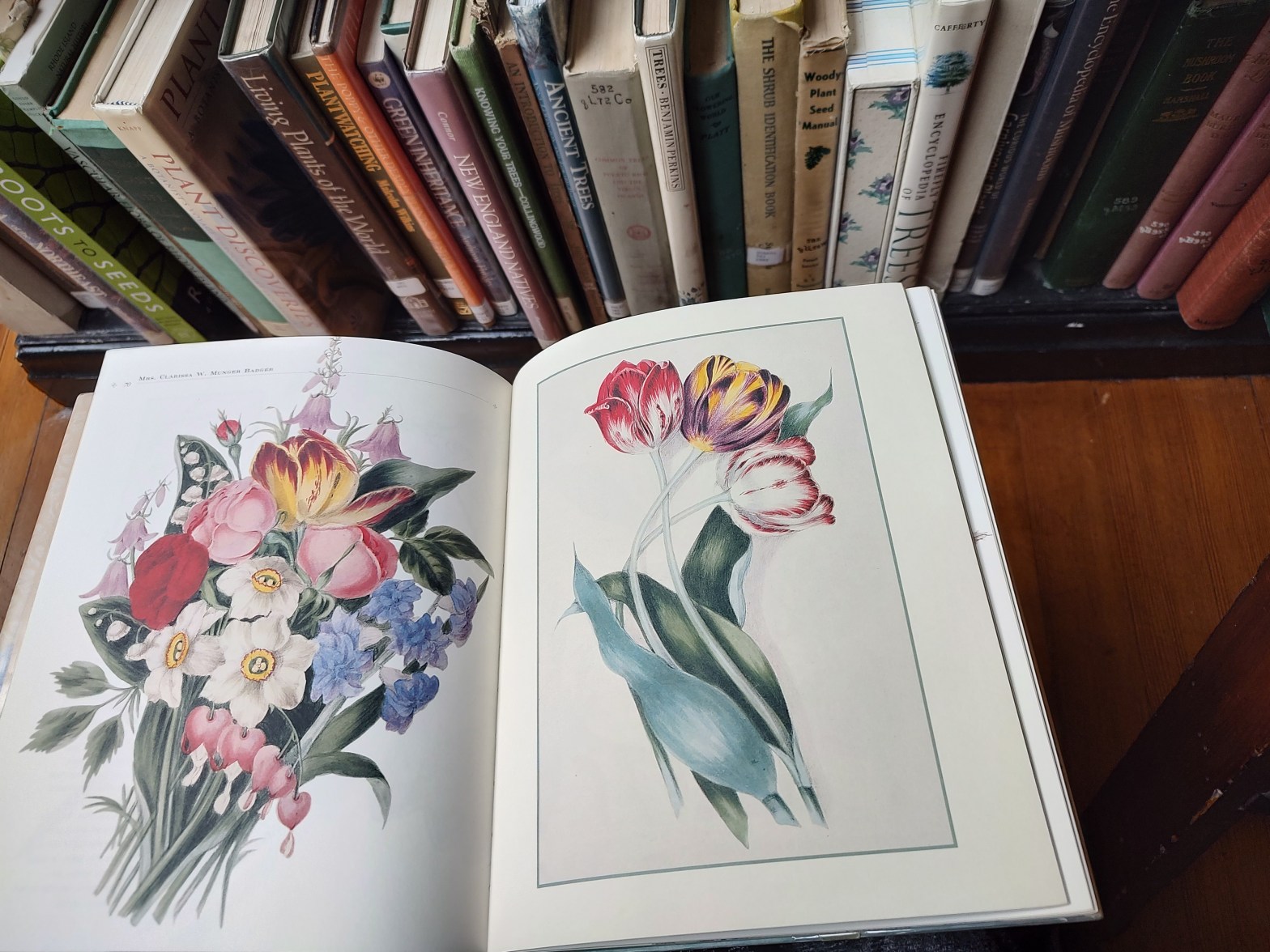
A reading space at The Providence Athenaeum, February 2024.

For me, 2023 was about getting back into the groove of reading recreationally. I graduated from university in April, and after spending four years reading for a grade, it was a challenge both to motivate myself to read at all post-grad and to rediscover the joy of reading just because.

To cleanse my palette, I only read what I really wanted to read. At first, I mostly stuck with authors I knew wouldn’t let me down and I tried not to beat myself up when it took me weeks or even months to finish a book. I didn’t finish a book until March. Eventually, though, I got my appetite back and started reading not only all the books by my favorites that I could get my hands on but also a scattershot collection of new authors, picked mostly at random from the shelves of my local library. (If you make it to the bottom of this page to see the full list, you’ll see that I’m not kidding about scattershot).

You’ll see that two authors stand out on my list. Barbara Kingsolver and Louise Erdrich outpaced every other author I read this year by leaps and bounds. I couldn’t get ahold of their books fast enough.

I read The Bean Trees, Kingsolver’s first novel, back in high school, but – let’s be honest – it went way over my head. I rediscovered her books about a year ago thanks to a copy of Prodigal Summer I found in a used bookstore. Since then, I’ve torn through Flight Behavior, The Poisonwood Bible, The Bean Trees again (it was much more powerful at 22 than at 16), Pigs in Heaven, and Demon Copperhead, plus two of her essay collections, Small Wonder and High Tide in Tucson. (It should be noted that my high school English teacher (bless him), once lent me a copy of High Tide in Tucson. At the time I found it slow and uninteresting, but today I see that he was right; it’s a book I needed to read, then and now). I’m reading Animal Dreams now and Unsheltered and Homeland and Other Stories are high priorities for me in 2024.

I discovered Edrich last year after winning a copy of Love Medicine in an English Department giveaway. I’ve torn through The Round House, Tracks, The Beet Queen, The Plague of Doves, LaRose, Four Souls, The Bingo Palace, and Future Home of the Living God and still have Erdrich novels left to read (they are all on my list for 2024). Over and over again, these books surprised me with their tenderness and their persistent attention to both the horror and the divineness of this world we’re in. 

For me, LaRose was a standout. It made me think about forgiveness, justice and mercy more deeply than any text that actually uses those words has been able to.

In addition to these reliable favorites, I read a variety of novels by new authors this year. My strategy for choosing them was this: 

  1. Walk into a library.
  2. Go to the fiction section, avoiding (for the most part) genre fiction.
  3. Read spines until you find a woman’s name.

This is a strategy I started using in 2022 after I stumbled across Imbolo Mbue’s How Beautiful We Were and Miriam Toews’ Women Talking and started wondering “Where have novels by women been my whole life?” I realized with regret and anger that ever since I stopped reading American Girl books and Laura Ingalls Wilder, my reading lists have been dominated by men.

Reading only women novelists is a strategy I highly recommend. In 2023, it led me to stunning debut novels like Celeste Ng’s Everything I Never Told You (a long-overdue read) and Alice Winn’s In Memoriam, award-winning books like Tayari Jones’ An American Marriage and Jennifer Haigh’s Mercy Street, and many less prominent novels, like Jane Hamilton’s The Excellent Lombards, J. Courtney Sullivan’s Saints for All Occassions, and Sujata Massey’s The Sleeping Dictionary. I’m not going to rank my favorites, for there were many. I’ll just tell you that if someone asked for a recommendation from my last year of reading, I would lend them my copy of LaRose without thinking twice.

And now, for the full list: everything I read in 2023.

NOVELS

  • Cloud Cuckoo Land, Anthony Doer
  • Normal People, Sally Rooney
  • Love Medicine, Louise Erdrich
  • Beautiful World, Where Are You? Sally Rooney
  • Flight Behavior, Barbara Kingsolver
  • The Poisonwood Bible, Barbara Kingsolver
  • The Bingo Palace, Louise Erdrich
  • Four Souls, Louise Erdrich
  • Of Women and Salt, Gabriela Garcia
  • Tracks, Louise Erdrich
  • LaRose, Louise Erdrich
  • Demon Copperhead, Barbara Kingsolver
  • The Bean Trees, Barbara Kingsolver
  • Pigs in Heaven, Barbara Kingsolver
  • And the Mountains Echoed, Khaled Hosseini
  • Libertie, Kaitlyn Greenidge
  • The Benefits of Being an Octopus, Ann Braden (Children’s Novel)
  • The Round House, Louise Erdrich
  • The Plague of Doves, Louise Erdrich
  • Afterlife, Julia Alvarez
  • The Sleeping Dictionary, Sujata Massey
  • Everything I Never Told You, Celeste Ng
  • Saints for All Occasions, J. Courtney Sullivan
  • An Observant Wife, Naomi Regan
  • An American Marriage, Tayari Jones
  • A Map for the Missing, Belinda Huijuan Tang
  • Mercy Street, Jennifer Haigh
  • The Excellent Lombards, Jane Hamilton
  • In Memoriam, Alice Winn
  • Future Home of the Living God, Louise Erdrich
  • Animal Dreams, Barbara Kingsolver

NONFICTION & POETRY

  • Of Bone and Pinion, Andy Saur (my friend!)
  • Say the Word, Andy Saur
  • Educated, Tara Westover
  • Penguins in The Desert, Eric Wagner (a more philosophical read than one might expect)
  • Small Wonder, Barbara Kingsolver
  • High Tide in Tuscon, Barbara Kingsolver